The geology of Wales is rich, diverse and varied, historically studied to the extent that several geologic periods of time are typified and immortalised by Welsh locales such as the Cambrian (Period) and Llandovery (Epoch). The Paleozoic in particular is regularly exposed along the coasts, hills & valleys. Extensive industrial activity in the last few hundred years has led to the increased exposure and subsequent study of coal-bearing Carboniferous sequences of rock. Wales was a strange place in the Carboniferous, situated on the equator it was an expansive lowland swamp. Hot, humid and thick with primitive looking plants.
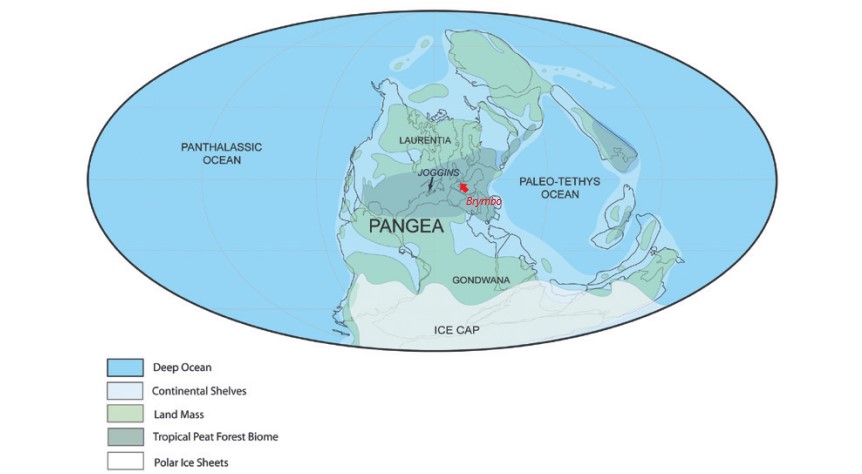
Brymbo, Wrexham, where the Fossil Forest is situated was at the northern foot of a string of large upland areas known collectively as the Wales-Brabant High, to the south of which were more lowland swamps stretching across Southern-Wales into the the Southern UK and beyond

Brymbo is situated within a geological feature known as the Denbighshire coalfield, this coalfield represents cycles of lowland environments over time including wetlands, swamps, forests and braided river systems.
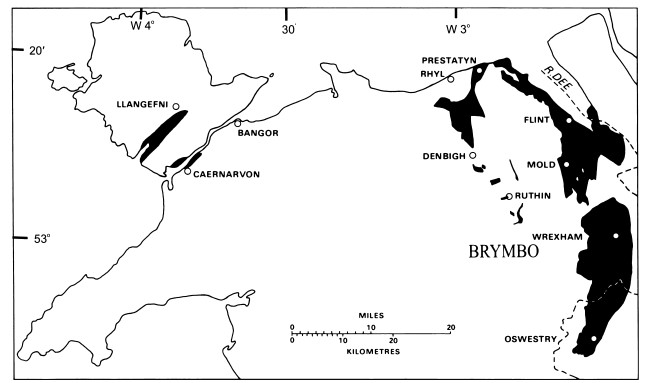
The numerous coal seams deposited during this period represent the build up of plant material left by the living forests on the forest floor. The relative absence of fungi and bacteria dedicated to breaking down woody material resulted in the build up of peats and organic rich sediment during this time which led to coal formation during the carboniferous that is extensive and subsequently would never occur again at the same rate in the earths history.
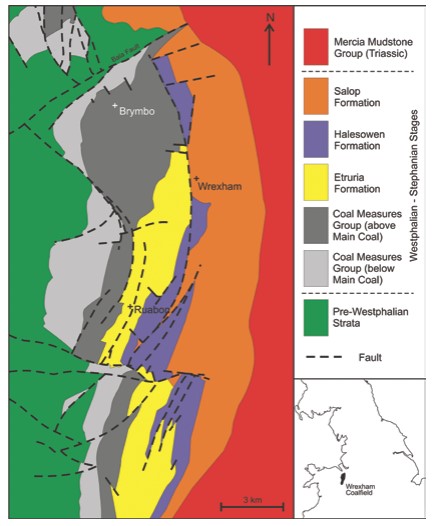
Brymbo’s position, at the foot of the Wales-Brabant High and the southern extremity of the Denbighshire coalfield, results in a geological succession consisting of the lower part of grey coal-bearing beds (Lower and Middle Coal Measures) that pass upwards into barren red beds of the Etruria Formation (Thomas & Seyfullah 2015). The closure of the Brymbo Steel Mill in 1993 was followed with the purchase of the land by Brymbo Developments Ltd with the intent of reclaiming the sub-surface coal in the area to fund future developments on the site. The reclamation works took place from the mid 1990’s through to the mid 2000’s with the site being excavated to over 50ft in depth to reach the Main Coal seam.
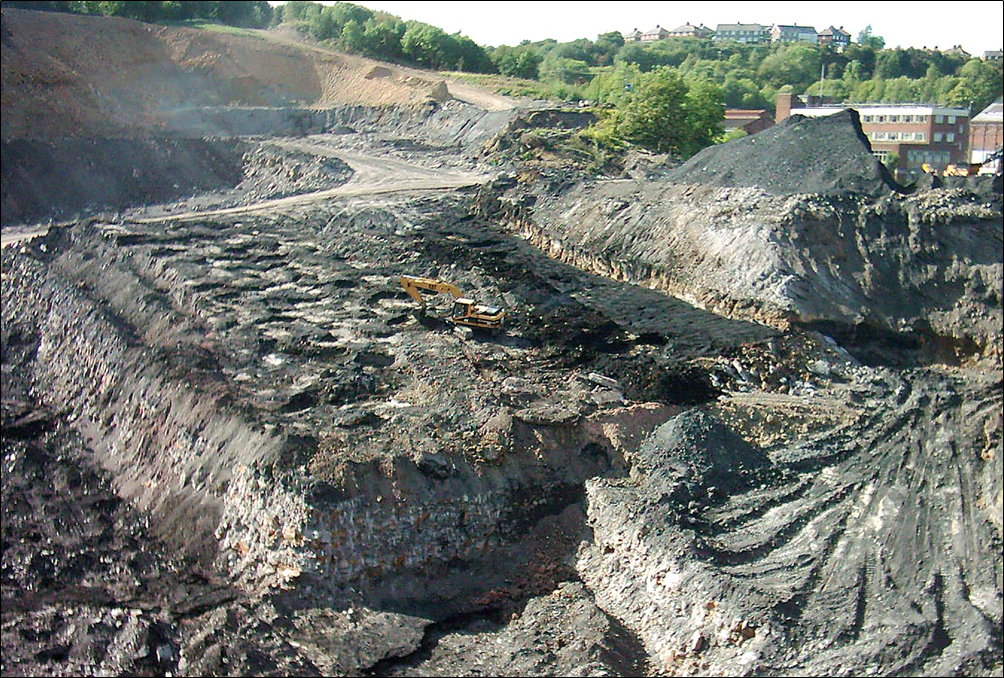
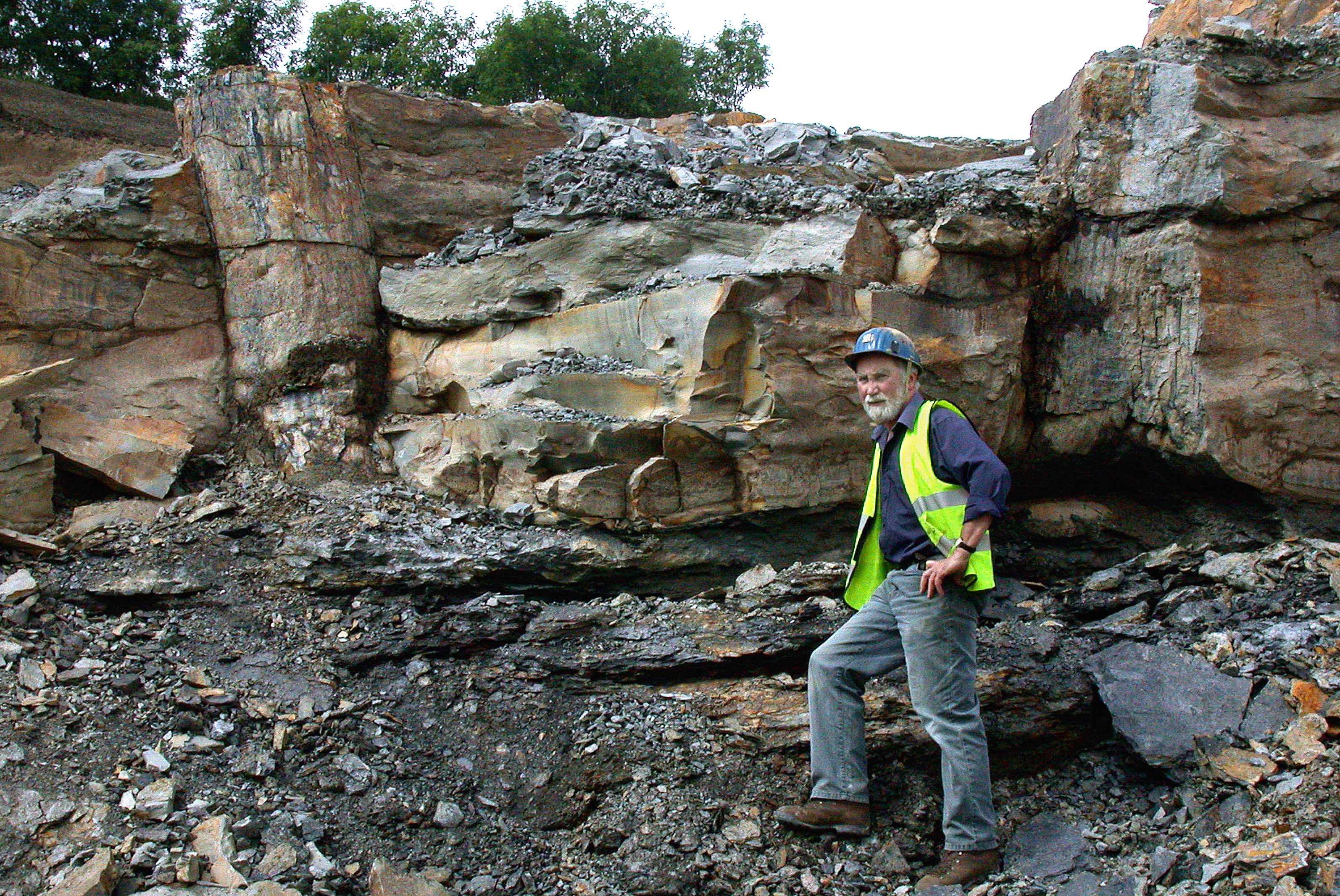
While fossils within coal bearing deposits are common, During the latter part of the reclamation works around 2005 it became apparent that the frequency, size and quality of fossil ‘tree’ stumps in this exposure was anomalous. Luckily the experienced director of the reclamation project (and now long-time Brymbo Heritage Trust volunteer) Andrew Foster halted works while assessment by geologists and palaeontologists could take place. It quickly became apparent that what was represented were the remains of in-situ fossilised lycopod trees and calamatian horsetails that made the Brymbo site exceptional and scientifically important. Subsequent excavations and efforts by the Brymbo Heritage Trust led to the site being designated a SSSI in 2008, protecting the fossil forest for future exploration and display.
The geologic section represented at Brymbo includes sediments from the Main Coal to
the Two Yard Coal (Duckmantian / Westphalian C). The Brymbo Fossil Forest exposure shows the uppermost 14 meters of the Coal Measures which are associated with two coal seams, the Crank Coal at the bottom of the exposed section and the Two Yard Coal at the top.
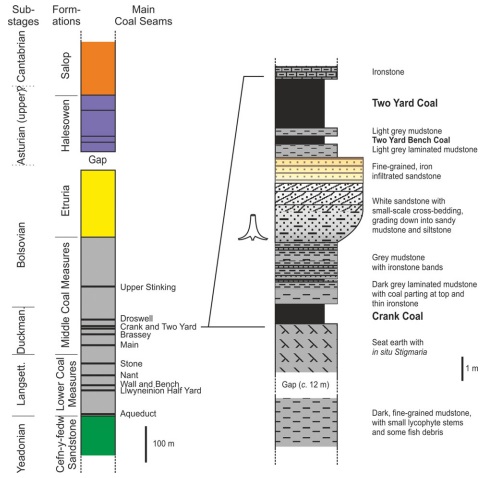
The Section begins at the bottom with a seat earth (fossilised soil) that contains the roots of large lycopod ‘trees’ known as Stigmaria. Immediately above this is the Crank Coal, the smaller of the two coal seams seen on the fossil forest site. Above the Crank is a finely laminated (layered) unit of mudstone (actually ‘fire-clay’, one of the major components in brick making and was utilised as a resource on-site in the 1800’s). This mudstone continues upward with semi-discrete layers of ironstone occurring as siderite concretions. These nodules are extremely iron-rich and were likely utilised as a source of iron in the early days of metallurgy at the Brymbo site. The siderite concretions themselves are somewhat enigmatic, occurring in similar deposits worldwide, the method of their formation is still unclear, however, between 80-90% of the concretions from brymbo contain beautifully preserved fossil plants, and occasionally, animals.

Above the mudstone (which coarsens upward to contain more sand) is a large sandstone unit representing the inundation of the area, large swathes of the area would have been covered in sand washed down by tropical storms dumping water onto the Wales-Brabant High. Lycopod stumps in the clay layers were filled in with the flooding sediment and preserved in place. Above these sandstones is another mud unit, signifying the start of the cycle again. These cycles of rock types are called ‘cyclothems‘ and represent repeated fluctuations in global conditions.
 The Brymbo Fossil Forest Project